
Wheel Balancers for Cars, SUVs, and Trucks: Understanding the Importance of Tire Balancing for Vehicle Safety and Performance
When it comes to vehicle maintenance, tire care is often overlooked despite its critical role in ensuring the safety, performance, and longevity of your vehicle. A key aspect of tire maintenance is proper wheel balancing. Tire balancers are essential tools that help ensure your tires rotate evenly, which can greatly improve your vehicle’s driving experience. In this article, we will explore the importance of wheel balancing, how tire balancers work, and why they are essential for cars, SUVs, and trucks.
The Importance of Proper Wheel Balancing
Tire balancing is a crucial aspect of vehicle maintenance, affecting everything from driving comfort to vehicle safety. Properly balanced wheels ensure that the weight of the tire and wheel is evenly distributed. When the wheels are not balanced correctly, it can lead to several problems, including uneven tire wear, vibrations while driving, and excessive strain on your vehicle’s suspension system. Over time, these issues can contribute to more significant mechanical failures and even compromise road safety.
For vehicles of all types—cars, SUVs, and trucks—tire balancing is particularly important because of the demands placed on the tires during daily use. Vehicles that regularly travel long distances, carry heavy loads, or operate in challenging road conditions (such as uneven or poorly paved roads) are especially vulnerable to tire imbalances. Proper balancing ensures smooth operation, improves fuel efficiency, and enhances the overall lifespan of the tires.
How Do Tire Balancers Work?
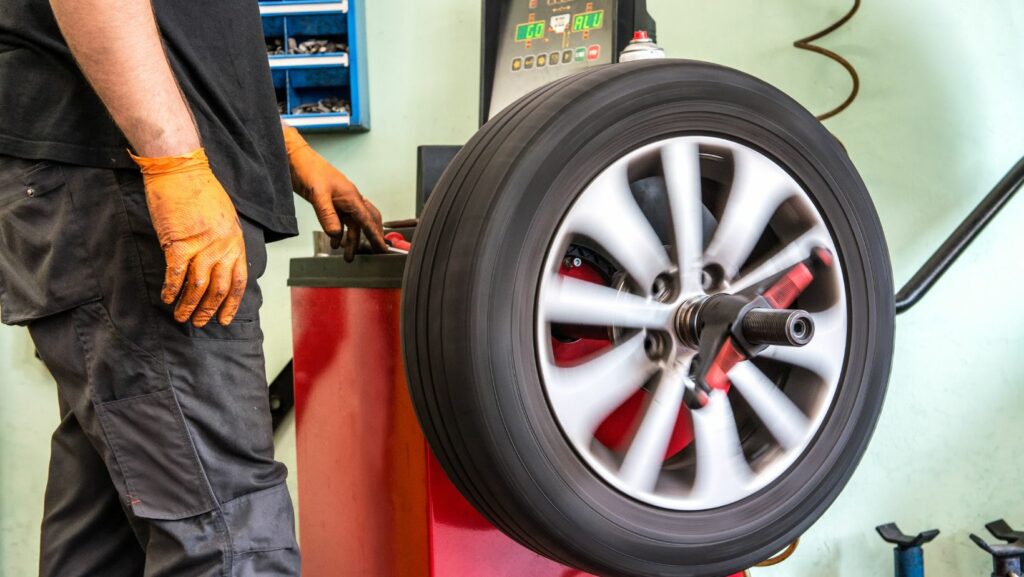
Tire balancers are machines designed to measure and correct the balance of your vehicle’s wheels. They are typically used at service centers and garages to ensure that each tire and wheel assembly is properly balanced. The process involves placing the wheel and tire assembly on the balancer, which spins the wheel to detect areas of imbalance.
The balancer then measures any variations in the weight distribution of the tire and wheel assembly. If the system detects an imbalance, it instructs the technician on where to place small weights on the wheel to correct the imbalance. These weights are usually attached to the rim of the wheel to compensate for heavy spots.
There are two main types of tire balancing machines used in most automotive repair shops: static tire balancers and dynamic tire balancers.
- Static Tire Balancers: These are the simplest type of balancer and are used primarily for small, light vehicles. They measure the tire’s imbalance in a single plane and are designed to detect vertical imbalance (up-and-down issues).
- Dynamic Tire Balancers: These are more advanced machines that measure imbalance in two planes—both vertical and horizontal. This allows for a more comprehensive analysis of tire balancing and is generally used for heavier vehicles like trucks and SUVs. Dynamic balancers provide a more accurate and precise measurement, which leads to better results, especially for large and heavy vehicles.
Why Tire Balancers Are Essential for Vehicles
Enhanced Driving Comfort
When your tires are not properly balanced, you will likely experience unwanted vibrations while driving, particularly at higher speeds. These vibrations can make the ride uncomfortable and may even cause steering wheel shakes. Over time, these vibrations can lead to premature wear on various parts of your vehicle, such as the suspension system, steering components, and even the tires themselves.
A properly balanced tire ensures a smooth and comfortable ride, free from vibrations. This not only improves comfort but also contributes to a safer driving experience, allowing drivers to maintain better control over the vehicle.
Improved Tire Longevity
Uneven tire wear caused by an imbalanced wheel can significantly reduce the lifespan of your tires. Tires that wear unevenly will need to be replaced sooner, which is a costly repair. Additionally, improper balancing may cause specific sections of the tire to wear out faster, leading to a rougher ride, decreased fuel efficiency, and reduced safety.
By balancing your tires correctly, the wear on your tires is more uniform, which helps them last longer and saves you money in the long run. Tire balancing also helps prevent tire blowouts, a common issue that can arise from poorly balanced tires that cause increased friction and stress on the tire walls.
Protection for Suspension and Steering Systems
Tire imbalances can place excess stress on your vehicle’s suspension and steering components. As the wheels vibrate and become misaligned, they affect the suspension system’s ability to properly absorb shocks and bumps. This can lead to premature wear on shocks, struts, and other suspension components.
Similarly, the steering system can suffer if the wheels are not balanced. The vibrations caused by imbalanced wheels can impact the steering wheel and cause unnecessary wear on the components that control steering precision. By ensuring that your tires are properly balanced, you reduce the risk of damage to both the suspension and steering systems.
Improved Fuel Efficiency
Imbalanced tires create additional friction between the tires and the road. This increased resistance can negatively affect your vehicle’s fuel efficiency, as the engine has to work harder to overcome the added drag. By keeping your tires balanced, you ensure that the tires rotate smoothly and evenly, reducing rolling resistance and ultimately improving your vehicle’s miles per gallon (MPG).
Over time, small improvements in fuel efficiency can add up, especially for drivers who frequently commute long distances or travel on highways. The economic benefits of proper tire balancing are clear, especially when you consider that even small increases in fuel efficiency can lead to significant savings.
Common Signs of Unbalanced Tires
Recognizing when your tires need balancing can save you from more serious and costly issues down the road. Some common signs of unbalanced tires include:
- Vibrations: As mentioned, one of the most noticeable signs of unbalanced tires is vibrations that are felt in the steering wheel, seat, or floorboard, especially at higher speeds. These vibrations are caused by uneven weight distribution and can worsen over time if left unaddressed.
- Uneven Tire Wear: Another indication that your tires might need balancing is if you notice uneven tread wear across your tires. One side of the tire may appear more worn than the other, which can lead to further damage and reduced tire life.
- Steering Wheel Pulling: If the steering wheel pulls to one side while driving, it could be a sign of an imbalance in your tires. This is typically accompanied by vibrations or shaking, especially at high speeds.
- Noisy Ride: Excessive road noise that seems louder than usual might indicate an imbalance, especially if it is accompanied by vibrations. Imbalanced tires can cause irregular friction against the road, leading to increased noise levels.
Regular Tire Balancing: A Key to Vehicle Maintenance
For optimal vehicle performance and longevity, regular tire balancing is essential. The frequency with which you need to balance your tires can vary depending on factors like road conditions, driving habits, and the type of vehicle you drive. Typically, tire balancing should be performed every 6,000 to 8,000 miles, or whenever you notice the common signs of imbalance.
If you frequently drive on rough or uneven roads, or if you carry heavy loads (such as in trucks and SUVs), you may need to balance your tires more often to ensure they are in top condition. Keeping an eye on your tire health and scheduling regular maintenance can help you avoid costly repairs and keep your vehicle running smoothly for years to come.
Conclusion
In conclusion, tire balancers are crucial tools that play an essential role in maintaining vehicle performance and safety. Proper wheel balancing not only enhances driving comfort but also improves tire longevity, protects suspension and steering components, and boosts fuel efficiency. Whether you drive a car, SUV, or truck, ensuring that your tires are properly balanced can prevent issues that could otherwise lead to costly repairs and safety hazards. By understanding the importance of tire balancing and recognizing the signs of imbalance, you can take proactive steps to maintain the health of your vehicle and enjoy a smoother, safer ride.