
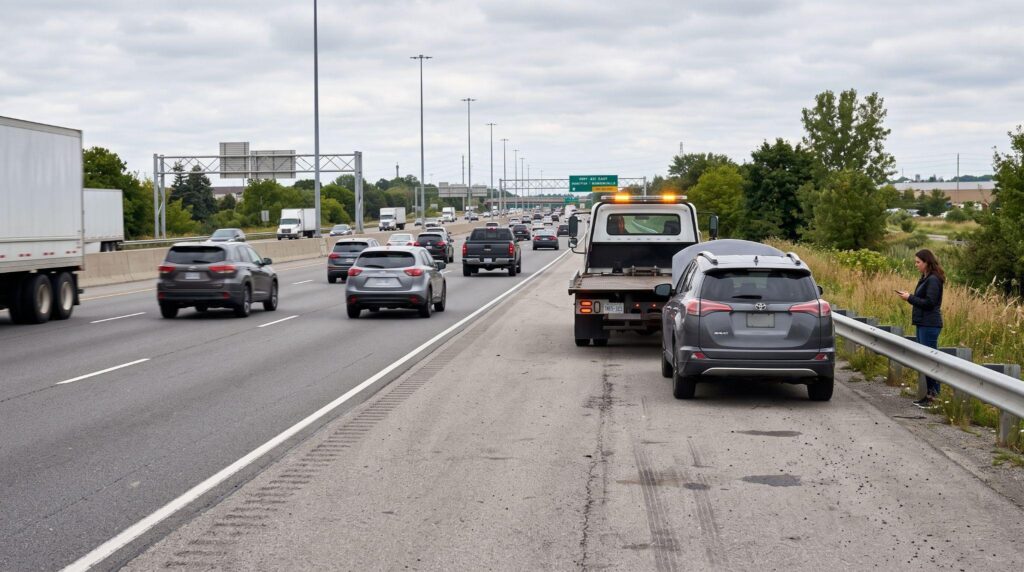
Routine maintenance lowers the odds of a roadside breakdown, but it does not eliminate them. That is the uncomfortable truth many Ontario drivers learn only after a dead battery, a shredded tire or an overheating engine leaves them stranded on the shoulder. A vehicle can feel fine on Monday, hesitate on Tuesday and need roadside help by Wednesday.
That gap between “generally maintained” and “actually road-ready” is what makes breakdown prevention such an important part of car ownership. It is also why the subject fits naturally within car maintenance, not just emergency towing. In places like Oshawa and Bowmanville, where drivers move between local streets, suburban errands and long Highway 401 trips, small maintenance issues can turn into real roadside problems faster than many motorists expect.
Canadian vehicle fleets are aging, and that matters. Recent industry reporting in Canada has put the average vehicle age at about 10.5 years, which means more drivers are relying on cars well beyond their early ownership years. Older vehicles can still be reliable, but they are also more likely to need batteries, brakes, tires, suspension parts, belts, hoses and cooling-system attention than newer ones. That trend helps explain why roadside breakdown causes in Ontario are so often rooted in ordinary wear rather than dramatic mechanical failure.
This article is general information only. It is not a substitute for a mechanic’s inspection, manufacturer guidance or emergency advice for a live roadside situation.
Why Modern Vehicles Still Break Down
Drivers often assume a serious warning light will appear before the car becomes undriveable. Sometimes that happens. Often it does not.
Many roadside failures begin as normal wear: a battery that has lost cold-weather capacity, tires that are legal but increasingly vulnerable, brakes that still stop the car yet are moving closer to unsafe territory, or coolant loss that seems minor until a long drive exposes it. Even routine commuting can amplify those issues. Stop-and-go traffic, uneven pavement, potholes, winter temperature swings and frequent short trips all put stress on the systems that most often trigger breakdowns.
In Durham Region, those patterns are familiar. A driver may spend the week making short urban runs through Oshawa, then head east toward Bowmanville or onto Highway 401 for a longer trip where the vehicle is finally pushed harder. That is often when borderline components stop coping. For anyone focused on car maintenance breakdown prevention, the lesson is simple: the absence of a dramatic symptom is not proof that the car is ready for another season.
Battery Failure Still Leads the List for Many Roadside Calls
If one problem deserves the title of most common everyday breakdown, it is battery failure. Cold weather makes batteries weaker, but heat is often what shortens their life in the first place. By the time a freezing morning arrives, an already aging battery may have very little reserve capacity left.
This is one reason battery trouble remains such a consistent source of roadside breakdown causes Ontario drivers deal with year after year. A car may start slightly slower for weeks and then fail completely after a cold snap, a missed weekend drive or a day of short trips that never fully recharge the system. Corroded terminals and a weak alternator can make the situation worse.
CAA and regional roadside organizations regularly highlight battery-related calls during cold periods, and that aligns with what many repair shops see every winter. Ontario drivers often underestimate how much short-distance driving works against battery health. If the engine is started repeatedly for school runs, errands or short commutes without enough highway time to recharge, the battery can remain under stress even when the rest of the car feels normal.
For motorists trying to prevent vehicle breakdown Ontario conditions make more likely, battery checks should be treated as seasonal maintenance, not as something to think about only after a no-start event.
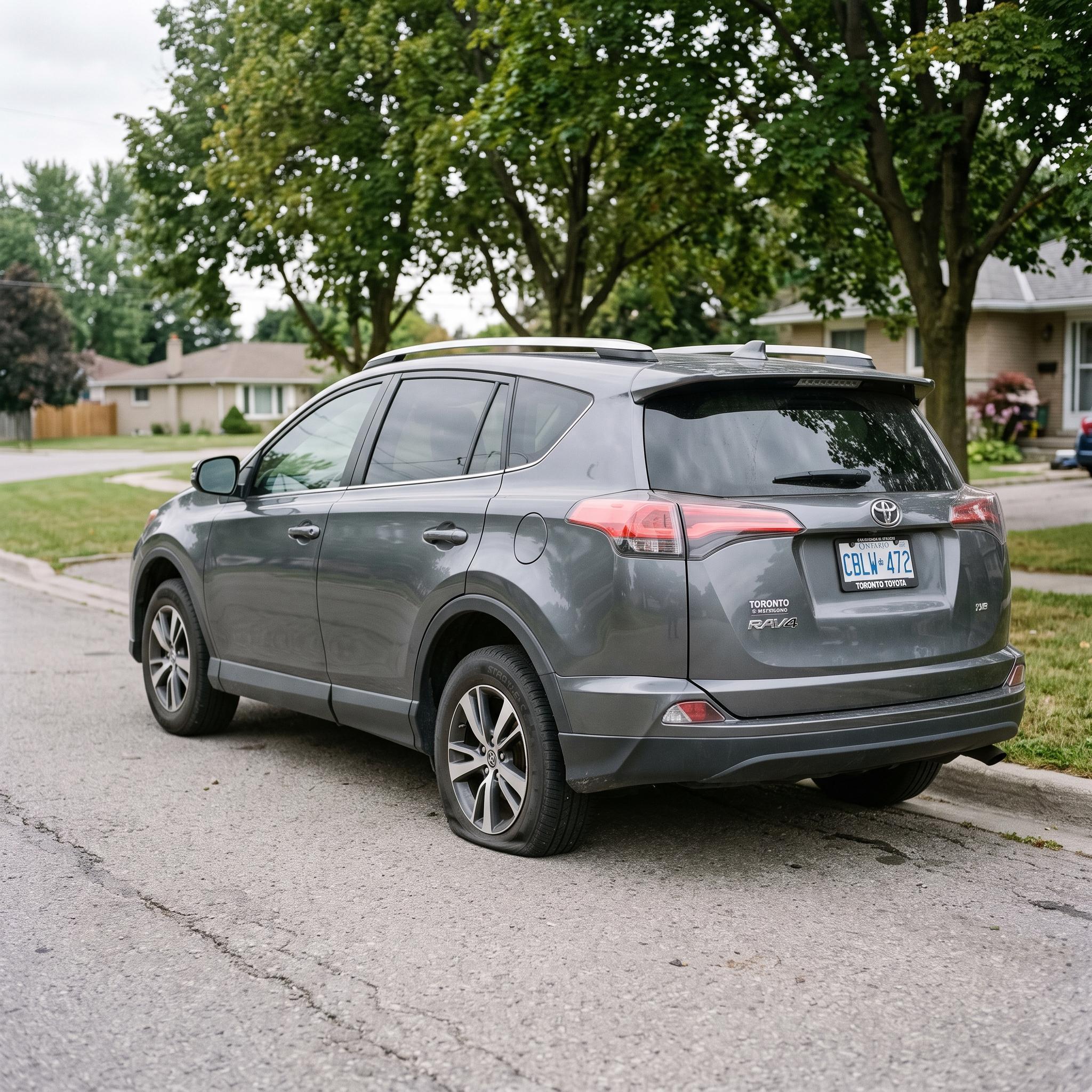
Tires Fail for More Reasons Than Low Tread
Tires cause roadside problems in ways that are not always obvious from a quick driveway glance. Low tread matters, but so do pressure loss, sidewall damage, uneven wear, punctures, impact damage from potholes and temperature-related pressure swings.
That is especially relevant in regions where drivers regularly deal with construction, cracked pavement and highway-speed travel. Durham commuters moving between local roads and Highway 401 can put significant stress on their tires without realizing it. A tire that survives neighbourhood driving may fail under extended heat buildup, higher speeds or after a sharp impact that already weakened the sidewall.
For that reason, flat tire roadside service is rarely just about bad luck. It often reflects a tire that was already vulnerable. Underinflation can increase heat, overinflation can affect wear, and neglected alignment can shorten the life of the entire set. Seasonal tire changes also create opportunities for problems if pressures are not reset and tread is not inspected carefully before installation.
When people talk about emergency towing Durham Region needs, they often picture collisions or engine failure. In practice, a simple tire issue remains one of the most common reasons a trip stops unexpectedly.
Brake Problems Usually Develop Slowly, Then Become Urgent
Brake failure rarely arrives without warning, but the warning signs are easy to normalize. A driver hears a slight squeal, notices longer stopping distances or feels minor vibration under braking and decides to monitor it later. Weeks pass. Then the car begins grinding, pulling or braking unevenly – or it becomes unsafe to continue driving at all.
That gradual progression is what makes brake issues so deceptive. They are often maintenance problems long before they become roadside problems. Worn pads, damaged rotors, seized calipers, leaking brake lines and neglected brake fluid can all contribute to a situation where the vehicle technically still moves but no longer does so safely.
This matters for seasonal car maintenance Ontario drivers should take seriously, because brakes are affected by salt, moisture and temperature swings as well as mileage. A car exposed to multiple winters may develop corrosion-related issues even if annual mileage is modest. That is one reason older vehicles can surprise owners. The car may not seem heavily used, but time itself can degrade key systems.
For drivers in busy corridors near Taunton Road, King Street or Bowmanville’s growing suburban routes, brake reliability is not optional. When stopping ability becomes questionable, continuing to drive is not a maintenance shortcut. It is a safety risk.
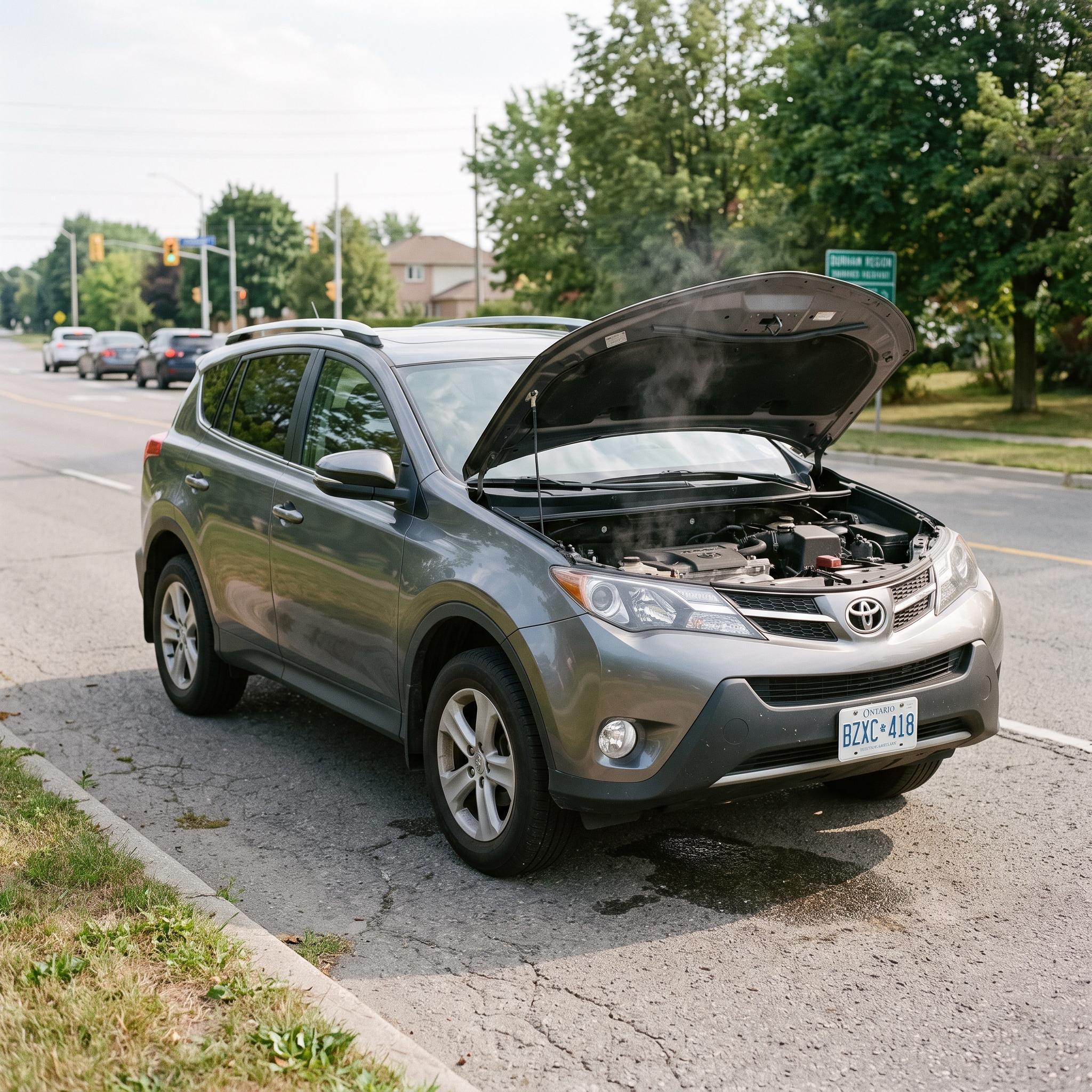
Overheating and Fluid Loss Often Start as Small Neglect
Some of the most expensive roadside failures begin with inexpensive maintenance misses. Low coolant, an old hose, a weak water pump, degraded transmission fluid or an oil leak that seemed manageable can all become serious under summer traffic, highway speeds or extended idling.
Overheating is a classic example. A driver may notice the temperature creeping upward only on hot days or only in traffic. That can be enough to ignore it for a while. But once cooling-system performance is compromised, a long drive or a slow-moving backup can turn a manageable issue into a full breakdown.
Fluid-related failures also tie into the broader question of vehicle roadside assistance demand. Many cars do not break down because a major component suddenly explodes. They break down because small losses, skipped inspections and delayed repairs slowly reduce the margin of safety. Belts, hoses and fluid condition still matter, even in a world of advanced sensors and service reminders.
For motorists focused on maintenance issues that lead to towing, fluid checks remain one of the least glamorous but most useful habits.
Why Durham Region Driving Patterns Increase Breakdown Risk
Durham drivers face a particular mix of vehicle stress. Many combine short local trips with regular regional travel. A car may be used for school pickup, grocery runs and commuting in the same week, then asked to handle long stretches of higher-speed driving with little preparation in between.
That combination matters because short trips are hard on batteries and fluids, while longer highway runs expose weaknesses in tires, cooling systems and older driveline components. Add winter conditions, summer heat, potholes and heavy congestion near major interchanges, and the car’s maintenance margin can shrink quickly.
Highway 401 is an obvious example. It is one of the busiest corridors in the country, and even a minor mechanical issue becomes more serious when it happens at speed or near dense traffic. A weak battery may reveal itself in a driveway, but a marginal tire or overheating engine often shows up under highway demand. For anyone researching Highway 401 breakdown risks, the real issue is not the road itself. It is the way high-speed, high-volume travel exposes neglected maintenance faster than local driving does.
This is why roadside support remains part of the real-world maintenance conversation. Drivers stranded near Stevenson Road, Courtice Road or Liberty Street are not always reckless or careless. Often, they are dealing with normal component wear that reached its limit at the wrong time.
What Drivers Should Keep in the Vehicle Before Trouble Starts
A smart maintenance plan includes preparation for the day something still goes wrong. That does not replace repairs, but it can reduce stress and improve safety when a breakdown happens.
Useful items to keep in the car include:
- a charged phone and vehicle charger
- reflective triangles or flares where appropriate
- a flashlight
- booster cables or an approved jump pack
- gloves
- a compact tire inflator and pressure gauge
- seasonally appropriate outerwear
- the vehicle’s insurance and registration documents
- a list of emergency contacts and roadside numbers
For Ontario motorists, safety matters as much as convenience. The province has strengthened towing and storage oversight through the TSSEA framework, and drivers should know they have rights around consent, destination choice and documentation in many towing situations. That broader regulatory focus reflects how stressful roadside events can be and why clear, professional service matters.
When Professional Towing Becomes the Safest Option
Some roadside issues can be handled on the spot. Others should not be. A dead battery may only need a boost. A flat may be solved with a spare if conditions are safe and the driver is equipped to do it. But brake failure, overheating, steering trouble, collision damage, suspension problems or a vehicle stopped in an unsafe position usually call for professional recovery.
That is particularly true on busy routes in and around Durham Region, where stopping locations are not always forgiving. Drivers stranded near downtown Oshawa, Ritson Road or Highway 401 often need safe recovery before any repair decision can begin, which is why local services such as Jim’s Towing Oshawa fit naturally into the broader roadside response picture.
The same logic applies farther east. For motorists dealing with breakdowns near Baseline Road, Liberty Street or the Bowmanville stretch of Highway 401, providers such as Bob’s Towing Bowmanville are part of that same safety chain when the vehicle cannot be driven responsibly.
The important point is not promotion. It is judgment. Knowing when to stop driving is part of responsible maintenance. A tow is sometimes the outcome of neglected service, but it is also often the right decision when continuing would risk worse damage or a dangerous roadside situation.
Build a Maintenance Routine That Lowers Your Odds
No maintenance checklist can guarantee that a vehicle will never need roadside help. It can, however, make a breakdown less likely and less severe.
A practical routine should include:
- seasonal battery testing
- monthly tire pressure checks
- regular tread and sidewall inspections
- brake inspections at sensible intervals
- fluid-level checks between services
- prompt attention to warning lights and new noises
- cooling-system review before summer travel
- a pre-trip inspection before longer highway drives
This is the more realistic version of preventive maintenance. It is not about assuming perfect control over every failure. It is about reducing the number of problems that could have been caught earlier. For Ontario drivers, especially those relying on aging vehicles through changing weather and heavy commuter corridors, that approach remains the best defense against being stranded.
The real takeaway is simple. Towing and maintenance are not opposites. They are linked. The better your routine, the lower your risk. But when a failure still happens, a safe response matters just as much as everything you did before it.
FAQs
What car problems most often lead to roadside breakdowns in Ontario?
Battery failure, tire damage, brake problems, overheating and fluid-related issues are among the most common causes. Many of these problems develop gradually rather than appearing all at once. Ontario weather, potholes, short-trip driving and highway commuting can all make borderline components fail sooner. That is why routine inspections remain important even when the vehicle seems to be running normally.
Can regular maintenance completely prevent the need for a tow?
No. Good maintenance lowers the risk, but it cannot eliminate every roadside emergency. Tires can be damaged by debris, batteries can fail suddenly and older components can give out despite reasonable care. The value of routine maintenance is that it reduces avoidable failures and helps drivers catch warning signs earlier. When a serious problem does occur, stopping safely and arranging proper recovery is often the best decision.
Why do so many breakdowns happen during seasonal weather changes?
Seasonal transitions put extra stress on vehicles. Cold weather weakens batteries, affects tire pressure and exposes older parts to harsher operating conditions. Summer heat can aggravate coolant loss, overheating and worn belts or hoses. These changes often reveal maintenance issues that were already developing quietly. A vehicle that seemed fine in one season can quickly become unreliable when temperatures shift.
When should a driver call for towing instead of trying to keep driving?
If the vehicle has brake trouble, steering issues, overheating, major tire damage, fluid leaks, collision damage or is stopped in an unsafe place, towing is usually the safer option. Continuing to drive can make the problem worse or create a hazard for you and other motorists. As a general rule, if the vehicle no longer feels safe or stable, it should be professionally recovered rather than pushed farther down the road.