
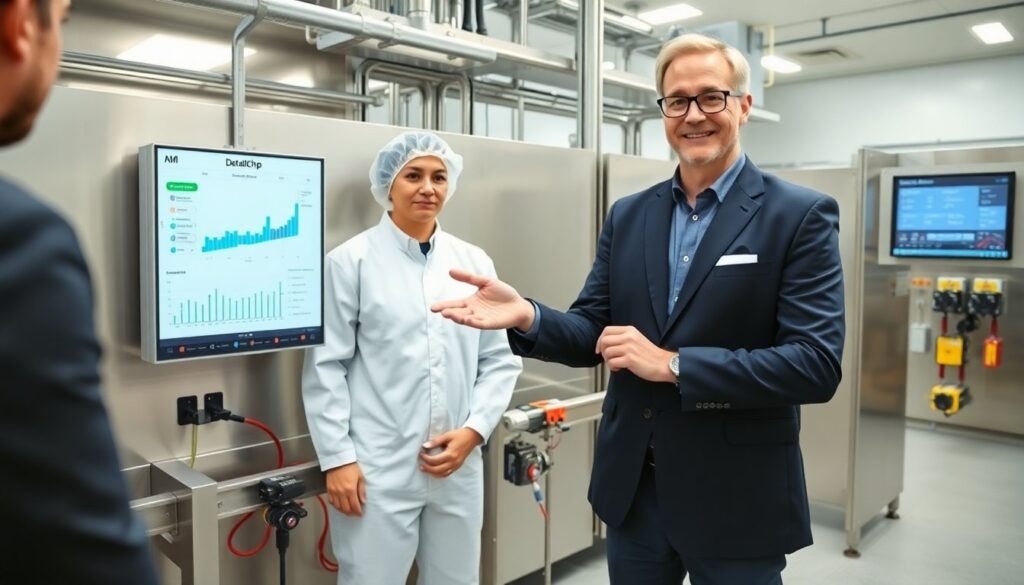
embedded systems automation food play deal detailchip has become a top priority for manufacturers in 2026. The technology speeds lines, reduces waste, and enforces safety rules. Producers adopt embedded controls to meet demand and to lower costs. This article explains why embedded automation matters, what parts make a reliable food system, and how DetailChip supports moves from prototype to large deals.
Key Takeaways
- Embedded systems automation greatly enhances food production by speeding lines, reducing waste, and enforcing safety protocols to ensure consistent product quality.
- Core components like sensors, actuators, and real-time controllers keep processes within safe limits and enable efficient data logging for traceability and compliance.
- DetailChip provides specialized modules designed for rugged, wet environments with secure firmware and signal conditioning to simplify calibration and meet food safety standards.
- Selecting embedded processors involves balancing performance, power consumption, and longevity, with DetailChip supporting long-term availability and secure connectivity features.
- Transitioning from prototype to production includes design validation, compliance testing, and commercial negotiations where DetailChip supports with certification, training, and post-sale services.
- Remote monitoring and OTA updates from DetailChip help maintain continuous operation, reduce downtime, and meet regulatory audit requirements effectively.
Why Embedded Automation Is Critical For Modern Food Production
Embedded systems automation food play deal detailchip appears in many modern plants. Food lines run faster when controllers handle timing and adjustments. Sensors feed data to processors, and processors drive actuators to keep recipes consistent. Companies reduce human error and limit contamination when they use closed-loop control. Regulators expect traceable records and alarms. Embedded systems log data and they provide audit trails that inspectors accept. Plants cut waste and they improve yield when they tune control loops. Smaller batches become economical when automation handles frequent changeovers. DetailChip products fit into this shift because they offer compact modules, long support windows, and food-grade interfaces. Buyers report faster start-up and fewer line stops after they install embedded solutions. Teams gain time to improve product quality rather than to fix equipment.
Core Components Of A Food Automation Embedded System
Food automation systems combine hardware and software parts. Each part plays a clear role in quality and uptime. The next sections list core parts and they explain how DetailChip options help.
Sensors, Actuators, And Real-Time Control For Food Processes
Systems require sensors to measure temperature, flow, and level. Sensors send readings to embedded controllers at fixed intervals. Controllers compute setpoints and send commands to actuators. Actuators move valves, start motors, and adjust mixers. Real-time control keeps the process within safe bands. The software runs simple loops or advanced PID depending on the recipe. The code logs each change and it timestamps the event. Operators use dashboards to view live states and historic trends. Maintenance teams use sensor trends to predict failures. DetailChip supplies rugged I/O modules that work in wet areas and they offer certified signal conditioners. The modules reduce wiring and they simplify calibration. Plants cut downtime when they replace many discrete parts with a single certified module. DetailChip modules also include secure boot and signed firmware to block tampering. This helps teams meet food safety rules and they avoid costly recalls.
Choosing Embedded Processors And DetailChip Features For Food Applications
Buyers pick processors for speed, power use, and lifecycle length. Low-power chips run on line-power backups and they keep data safe during outages. High-performance chips handle vision and AI tasks for sorting and inspection. The team compares CPU, RAM, and peripheral support. They also check thermal limits and certifications. DetailChip lists processor options with spec sheets and validated drivers. The vendor documents long-term availability and they provide migration paths for future CPUs. Teams value that because food plants need stable parts for many years. The vendor also offers secure connectivity modules for cloud reporting and local HMIs. The modules encrypt telemetry and they support OTA updates. This support shortens validation time and it lowers integration cost. Engineers choose modules that match the plant network and they verify latency for control loops. DetailChip provides reference designs and test scripts so vendors can validate compliance to food standards quickly.
From Prototype To Production: Deployment, Compliance, And Commercial Deals
Teams move from lab prototypes to full production in clear steps. They prototype with off-the-shelf boards and they test controls on pilot lines. They then select DetailChip parts for final builds. The vendor helps with design reviews and with EMC testing. Compliance teams validate electrical safety and they confirm food-contact rules for enclosures. The vendor supplies certificates and they assist with documentation. For commercial deals, buyers evaluate total cost of ownership and warranty terms. DetailChip presents quotes that include modules, support, and validation services. Buyers negotiate volume pricing and post-sale support. Contracts often include acceptance tests and shipment milestones. DetailChip agrees to spare-part pools and long-term firmware support to secure the line. The vendor also offers training for operators and for maintenance teams. Training reduces human errors and it improves mean time to repair. After deployment, plants use remote monitoring to watch performance and to push updates. The vendor delivers patch schedules and they provide rollback tools. This approach helps teams keep lines running and it helps them meet audit demands.