
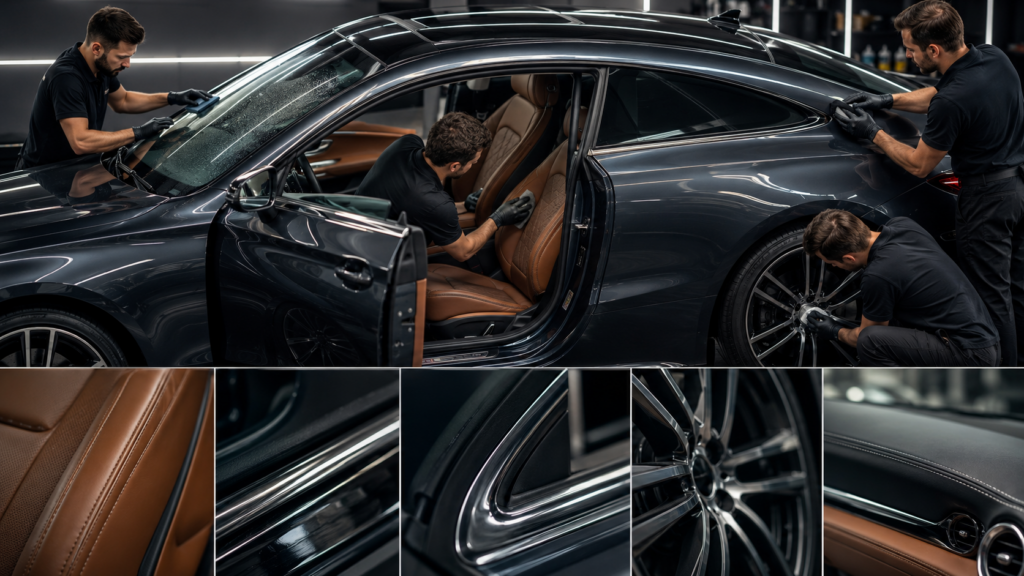
When people talk about vehicle condition, the conversation usually starts—and ends—with paintwork. Gloss levels, swirl marks, scratches, and ceramic coatings dominate detailing discussions, especially in enthusiast circles. A clean exterior is visually striking, but it tells only part of the story.
In reality, a well-maintained vehicle is defined just as much by the areas most drivers overlook. Interiors, trim components, wheels, glass, and even subtle finishing details often reveal far more about how a car has been cared for over time than the exterior finish alone.
Understanding these less visible elements of vehicle condition changes how we evaluate longevity, presentation, and even resale value.
Interiors: Where Wear Tells the Real Story
The interior is where a vehicle reveals its true history.
Seats, steering wheels, gear selectors, and touchpoints naturally degrade faster than exterior panels because they are in constant contact with the driver. Yet interior condition is often underestimated until wear becomes impossible to ignore.
Leather, for example, does not simply “stay good” with minimal attention. It dries out, absorbs oils, and develops surface cracking if not properly conditioned. Fabric interiors, meanwhile, accumulate embedded dirt and odours that standard vacuuming cannot fully remove.
Even modern synthetic materials used in newer vehicles are not immune. Glossy piano-black plastics, increasingly common in contemporary dashboards, are particularly prone to micro-scratching that becomes visible under direct light.
A well-maintained interior often signals a vehicle that has been consistently cared for, not just cleaned before sale or inspection.
Trim and Material Degradation Over Time
Exterior paint tends to get the most attention, but trim components quietly define how “fresh” a vehicle appears.
Rubber seals, plastic mouldings, and exterior trims degrade gradually due to UV exposure, temperature changes, and environmental pollutants. When these elements fade or become brittle, even a recently polished vehicle can appear older than it actually is.
Restoring trim is often less about aesthetics and more about preservation. Flexible plastics can be revived with conditioners that restore colour depth and prevent further cracking. Rubber seals benefit from treatments that maintain elasticity, ensuring proper door sealing and wind noise reduction.
Neglecting these details can lead to more than cosmetic issues. Worn seals, for instance, can contribute to water ingress and long-term interior damage.
Wheels: The Most Abused Design Feature
Wheels sit at the intersection of aesthetics and function, yet they are among the most neglected areas of vehicle care.
Brake dust, road salt, tar, and general grime accumulate rapidly, particularly on performance-oriented vehicles. Over time, this buildup can etch into the wheel surface, causing permanent staining or corrosion if not removed regularly.
Alloy wheels are especially vulnerable because their finishes vary widely—from polished faces to painted or diamond-cut surfaces—each requiring specific care approaches.
Beyond cleaning, structural maintenance is also often overlooked. Minor curb damage, unnoticed bends, or imbalanced wheels can affect both ride quality and tyre longevity.
Well-maintained wheels contribute significantly to the overall impression of a vehicle. Even a clean bodywork finish can be undermined by neglected rims.
Glass: The Invisible Safety Factor
Glass is one of the most underappreciated aspects of vehicle maintenance.
Windscreens, side windows, and mirrors are often cleaned superficially without addressing deeper issues such as micro-pitting, water spotting, or degraded hydrophobic coatings.
Over time, small imperfections in glass can distort visibility, particularly at night or in wet conditions. This is not just an aesthetic concern but a safety-related one.
Advanced glass treatments can improve water repellence, reduce glare, and make cleaning more effective, but they require proper application and maintenance to remain effective.
Clear glass is often mistaken for “normal condition,” when in reality it may be gradually degrading without obvious visual cues.
Lighting and the Modern Detail Layer
Modern vehicles increasingly rely on complex lighting systems that contribute both to safety and design identity.
Headlights and taillights are no longer simple bulbs behind plastic covers. They are intricate assemblies involving LED arrays, adaptive beams, and sculpted housings designed for both performance and aesthetics.
However, these surfaces are prone to oxidation, fogging, and internal condensation over time.
Dull or cloudy headlight lenses can significantly reduce night visibility while also affecting the perceived age of the vehicle. Restoration or protection of lighting units is often one of the most cost-effective ways to refresh a vehicle’s appearance.
Small Details That Signal Overall Condition
Beyond the major categories of interior, wheels, and glass, smaller details often form the subconscious impression of vehicle condition.
Badges, vents, door handles, exhaust tips, and even fasteners all contribute to how “complete” a vehicle appears. When these elements are clean, aligned, and intact, the entire car feels better maintained.
Conversely, neglect in these areas can create a sense of decline, even if the mechanical condition is excellent.
Automotive enthusiasts often refer to this as “cohesion”—the idea that a vehicle should feel consistent in its level of care across all components, not just the most visible ones.
Presentation, Identity and Modern Ownership
As vehicle ownership becomes increasingly expressive, presentation has taken on a broader meaning. A car is no longer just a functional asset; it is often a reflection of personal identity.
This has led to greater attention being paid to details that were once considered secondary. From interior finishes to personalised exterior touches, owners are investing more thought into how their vehicles are perceived as a whole.
Even small elements of individuality—such as customised finishes or subtle aesthetic enhancements—play a role in this broader expression of ownership. Businesses like Plates Express sit within this wider ecosystem of automotive personalisation, where attention to detail extends beyond performance and into presentation and identity.
Conclusion
Paintwork may be the most visible aspect of vehicle condition, but it is far from the most revealing. Interiors, wheels, trim, glass, lighting, and subtle finishing details collectively define how well a vehicle has been maintained over time.
A truly well-kept car is consistent in its condition across all areas, not just those that attract immediate attention.
In many ways, the difference between a clean car and a well-maintained one lies in these overlooked details—the parts that rarely dominate conversations but ultimately shape perception, value, and longevity.