
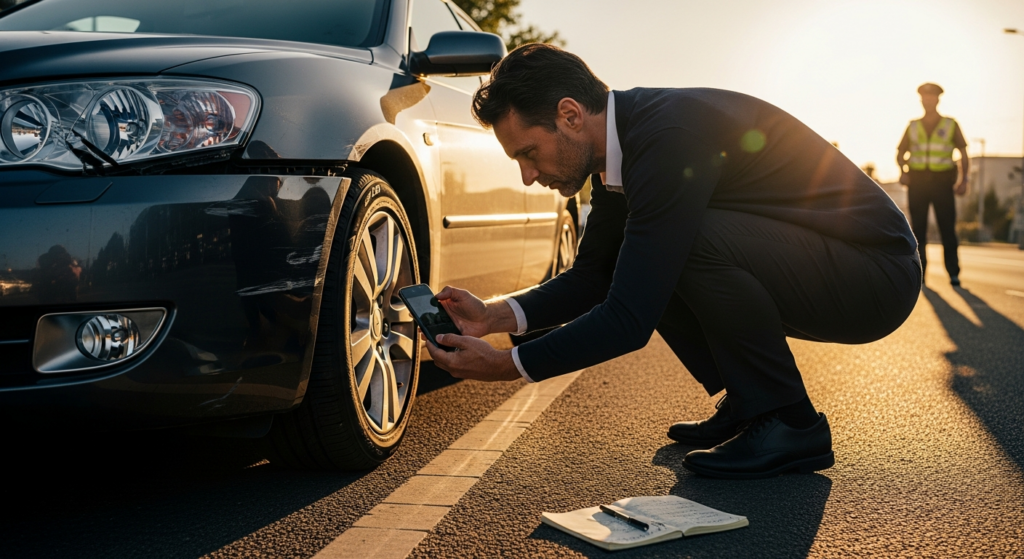
The sudden, violent sound of metal on metal is followed by a moment of deafening silence. The shock wears off, replaced by the disorienting realization of what just happened. A car crash is a jarring experience, but the moments that follow can have lasting financial consequences. The annual economic cost of motor vehicle crashes in the U.S. is a staggering $340 billion, a figure that underscores the high stakes of any collision. With studies indicating that approximately 94% of all car crashes are attributed to human error, the probability of being involved in one is far greater than many people assume. In these chaotic moments, critical mistakes in documentation are common, leading to significant challenges down the road.
Recent reports emphasize a crucial point: the biggest claim mistakes often occur long before the claim is even filed, starting with poor documentation from day one. As one financial news outlet noted, not properly disclosing or documenting information at the outset is the single biggest error people make, particularly when maintaining eligibility under a car extended warranty. In the immediate aftermath of a crash, your smartphone transforms from a communication device into the most powerful tool for protecting your financial interests. This guide provides the exact blueprint for using it to create an undeniable, comprehensive record for your insurance company, ensuring your path to recovery is as smooth as possible.
Your First Steps: Securing the Scene and Yourself
The first 15 minutes after a collision are the most critical. Your actions during this brief window can significantly impact your safety and the eventual success of your insurance claim. Navigating this period with a clear, methodical approach lays the essential groundwork for everything that follows. From ensuring the well-being of everyone involved to creating an official record of the event, these initial steps are non-negotiable for a positive outcome.
Prioritize Safety Above All Else
Before you even think about insurance or vehicle damage, your first priority must be the health and safety of yourself and any passengers. Immediately check for injuries. Even if you feel fine, the adrenaline from the event can mask pain. If you or anyone else is injured, do not move them unless they are in immediate danger and call for medical assistance. If the vehicles are still in active traffic lanes and can be moved safely, relocate them to the shoulder or a nearby safe location to prevent further incidents. Once stopped, turn on your hazard lights to alert other drivers. If you must exit your vehicle, do so with extreme caution, remaining constantly aware of oncoming traffic.
Contact Authorities and Exchange Information
Creating an official, impartial record of the event is essential. Call 911 immediately, even for what appears to be a minor incident. A police report is a vital piece of evidence that provides a neutral account of the scene, witness statements, and initial observations. Insurance adjusters rely heavily on these reports to understand the circumstances of the crash. While waiting for authorities, exchange information with the other driver(s). Be calm and cooperative, but stick to collecting the facts. You will need their full name, address, phone number, insurance company and policy number, driver’s license number, and license plate number. Take a photo of their documents if possible, but avoid engaging in any discussion about how the crash happened.
The Golden Rule: Watch Your Words
The language you use at the scene of the crash can have a profound impact on the outcome of your claim. It is imperative to stick to objective facts when speaking with the other driver and the police. Avoid making statements that could be interpreted as an admission of guilt, such as I’m so sorry or I didn’t see you. Insurance companies and legal teams scrutinize every word, and such apologies can be used to assign fault. The terminology you choose is critical. For instance, legal experts at Robinette Law Group explain the critical difference between an accident and collision, noting that ‘collision’ is a more neutral, factual term. It describes the event without the implication of a no-fault, unavoidable ‘accident’. This distinction is gaining official recognition; for example, in West Virginia, police officers now use the “State of West Virginia Uniform Traffic Crash Report,” replacing the older “Uniform Accident Report” to better reflect that most crashes are preventable and involve some degree of fault, as documented in a report on the terminology shift.
Creating a Bulletproof Visual Record of the Damage
After ensuring safety and contacting authorities, your smartphone becomes your primary tool for building an irrefutable case. A comprehensive visual record leaves no room for ambiguity or misinterpretation by an insurance adjuster. Photographs and videos captured at the scene provide context, detail the extent of the damage, and serve as a powerful counter to any potential disputes. This guide to photo and video documentation will guide you through capturing evidence that speaks for itself.
The Essential Photo Checklist
A structured approach to taking photos ensures you cover all necessary angles and details. Follow this checklist to create a complete visual narrative of the incident and the resulting damage. This methodical process helps ensure that nothing is overlooked in the stressful aftermath of a collision.
- Overall Scene (4-6 Photos): From a safe distance of 15-20 feet, capture wide-angle shots of the entire scene from all four corners. These photos should include the final resting positions of all vehicles, nearby traffic signs or signals, and the general road and weather conditions.
- All Vehicles Involved (6-8 Photos): Take photos of each vehicle from the front, back, and both sides. This establishes their overall pre-existing condition relative to the new damage and shows exactly where on each vehicle the impact occurred.
- Specific Damage (10+ Photos): This is where detail is paramount. Get close-up photos of every dent, scratch, shattered light, and broken part on your vehicle. Capture these from multiple angles. For scale, place a common object like a key or a coin next to smaller damages. Do not forget to thoroughly photograph the damage on the other vehicle(s) as well.
- Key Identifiers (3-4 Photos): Capture clear, legible photos of the other vehicle’s license plate. Also, photograph your own Vehicle Identification Number (VIN), typically visible on the dashboard through the windshield or on the driver’s side doorjamb, and your vehicle’s odometer reading to document the mileage.
- Environmental Evidence (2-3 Photos): Document anything in the surrounding environment that may have contributed to the collision. This includes skid marks, debris on the roadway, potholes, or specific weather conditions like ice patches or large puddles from rain.
- Interior Damage (2-4 Photos): If airbags deployed, capture photos of them. Also, photograph any damage inside the vehicle, such as a cracked dashboard, broken glass on the seats, or damage to personal items.
Beyond the Surface: Looking for Hidden Damage
The most significant and costly damage from a collision is often not visible to the naked eye. While a crumpled fender is obvious, underlying issues like frame damage, bent suspension components, cracked engine mounts, or a misaligned chassis can go unnoticed at the scene. These problems can compromise the structural integrity and safety of your vehicle. When you speak to the repair shop and the insurance adjuster, be sure to mention any new or unusual noises, vibrations, or changes in how the vehicle handles. These symptoms can be indicators of deeper, hidden damage that requires professional inspection to identify and repair correctly.
The Power of Video
While still photos are essential, video can provide a cohesive narrative that pictures alone cannot. A slow, narrated walk-around of the entire scene can be incredibly valuable. As you record, describe what you are seeing, showing the positions of the cars, the flow of traffic, the damage to each vehicle, and any relevant environmental factors. This creates a timeline and offers context that an adjuster can easily follow. The importance of this digital evidence is growing, as many insurers now have mobile apps that allow for the direct upload of photos and videos. This shift to digital claims processing, highlighted in recent analyses of the insurance industry, makes high-quality documentation more critical than ever for a quick and easy claim process. These digital tools are becoming the new standard, designed for a mobile-first user experience to streamline submissions.
Organizing Your Evidence for a Flawless Claim Submission
Once you have left the scene and ensured everyone is safe, the final step is to organize your collected evidence into a clear, compelling package for your insurance company. A well-organized submission anticipates the adjuster’s needs and preemptively answers their questions, which can dramatically speed up the claims process and lead to a more favorable outcome. This section will guide you on how to compile your photos, videos, and notes into a professional and undeniable claim file.
Writing Notes That Leave No Room for Doubt
Your memory of the event will be sharpest immediately after it occurs. As soon as you are in a safe place, write down everything you remember. Do not rely on memory alone, as details can fade or become confused over time. A written account created at the time of the collision is a powerful tool. Your notes should include:
- The Basics: Document the exact date, time, and specific location of the collision. Use street names, intersections, highway mile markers, or GPS coordinates.
- The Environment: Describe the weather conditions (e.g., sunny, raining, foggy), road conditions (e.g., dry, wet, icy), and visibility at the time.
- The Narrative: Write a step-by-step, factual account of what happened from your perspective. What were you doing just before the collision? Where were you going? What did you see, hear, and do? Stick to the facts and avoid emotional language or speculation.
- The People: Record the name and badge number of the responding police officer. If there were any witnesses, get their names and contact information. Their third-party accounts can be invaluable.
The Adjuster’s Perspective: What They Look For vs. What They’ll Question
Understanding what an insurance adjuster prioritizes can help you build a stronger claim. Adjusters are trained to look for consistency, clarity, and objective evidence. Conversely, they are also trained to spot red flags that might indicate inconsistencies or exaggerated claims. For example, a recent spike in suspected insurance fraud has made adjusters more diligent than ever in their investigations, making clear documentation essential to differentiate your legitimate claim.
| What Adjusters Value | What Raises Red Flags for Adjusters |
| Clear, time-stamped photos from multiple angles | Vague, blurry, or insufficient photos |
| A detailed, factual police report | Discrepancies between your statement and the police report |
| Consistent and prompt communication | A significant delay in reporting the incident |
| Organized receipts for towing and immediate expenses | Exaggerated claims or damage inconsistent with the incident |
| Detailed notes written at the time of the collision | Admitting fault or speculating on the cause of the collision |
Navigating Total Loss and Modern Repairs
The landscape of vehicle repair is changing, directly impacting insurance claims. Due to ongoing supply chain issues and the increasing complexity of modern vehicle technology, the rate of cars being declared a total loss is rising. One industry report revealed that nearly one in four cars involved in a crash is now written off. This trend is exacerbated by soaring parts costs and labor shortages, which push repair estimates above the threshold where an insurer decides it’s more economical to pay out the vehicle’s value. This makes your thorough documentation of your vehicle’s condition, unique features, and any recent upgrades absolutely critical. This evidence is vital for ensuring you receive a fair Actual Cash Value (ACV) payout that truly reflects what your vehicle was worth moments before the collision.
To support the value of your vehicle and its contents, it is wise to keep detailed records of maintenance and improvements. Just as professional detailers use specific methods for cleaning car tools to maintain their value and longevity, you should keep all receipts for new tires, engine work, or high-value items inside the car to support your claim. Furthermore, presenting your car for inspection in a clean state can help an adjuster more easily identify all points of damage. For those wanting a professional finish before an assessment, these eco-friendly deep cleaning tips using steam can help reveal every last scratch and scuff, ensuring nothing is missed in the adjuster’s report.
Your Blueprint for Financial Recovery After a Collision
A car crash is an unpredictable and deeply stressful event, but the process of financial recovery does not have to be. By taking control of the narrative from the very first moment, you can shift the dynamic significantly. Thorough, immediate, and organized documentation transforms you from a victim of circumstance into an empowered advocate for your own claim. The steps outlined in this guide—from prioritizing safety to meticulously photographing damage and organizing your notes—are not just suggestions; they are a proven strategy for navigating the complexities of the insurance system.
By following this blueprint, you are doing more than just taking pictures; you are building a case, protecting your investment, and ensuring the path to getting back on the road is as smooth and fair as possible. This meticulous approach provides clarity in the face of chaos and is the single best way to counter confusion, dispute potential discrepancies, and secure a flawless insurance outcome. Your diligence in these critical moments is your best defense and your most effective tool for a successful financial recovery.